
Premier vs Core Fixtures: Exploiting the Two-Speed Each-Way Market
 Available in US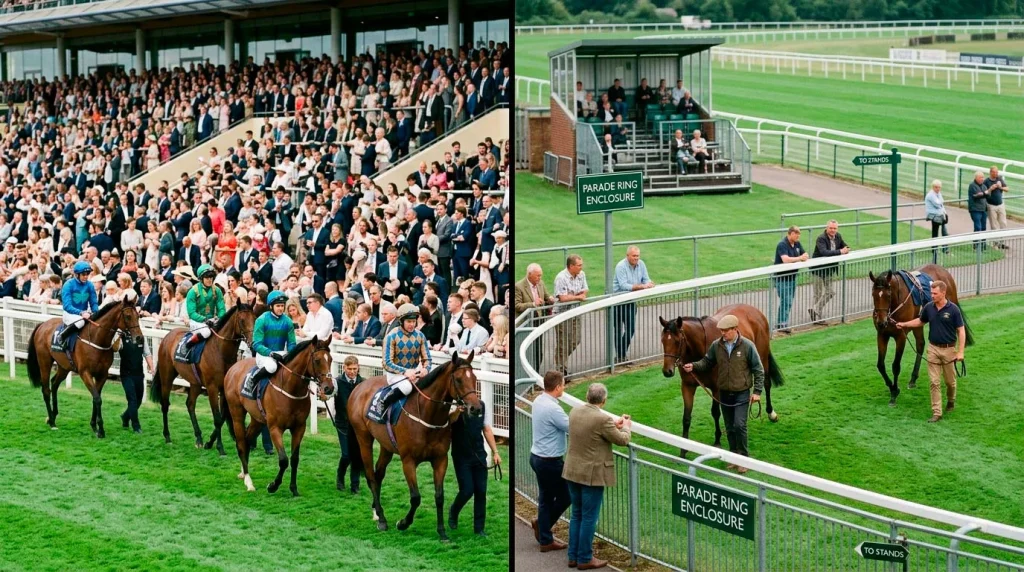
I had a long conversation with a trainer at Wetherby last October about why his runners had been getting smaller fields against them all autumn. He blamed everything from the going to the prize money to the time of year. The real answer was structural and it lived a layer above the racecard. The British Horseracing Authority had spent two years rolling out a two-tier fixture programme — Premier and Core — that has been quietly remaking UK racing in ways most punters do not see until they look at their settled bets. The BHA’s Q3 2025 Racing Report described the shape of the market plainly: “this preference for our highest profile fixtures is undoubtedly linked to the impact of affordability checks with there being fewer larger staking customers.” Premier Fixtures have absorbed the active money. Core Fixtures have been left to fight over what is left. And the each-way punter who treats the two tiers as interchangeable is paying for the difference in stake every Saturday.
I want to walk through what the two tiers actually are, what the 2025 data shows, how the field-size split lands on punters, and what that means for each-way value decisions in 2026.
What Premier and Core Actually Mean
I worked at a small UK racecourse one summer in my early twenties, before the Premier-Core split existed, and the fixture list there was just a fixture list — Saturday cards, midweek meetings, festival weeks, no formal hierarchy. The current programme imposes a structure on what was previously a flat schedule. Premier Fixtures are the BHA-designated high-profile cards intended to drive the sport’s commercial and media profile: roughly one hundred and ninety fixtures across the calendar, comprising the headline Saturdays, festival weeks, and selected weekday flagships. Core Fixtures are everything else — the bulk of the programme, around one thousand fixtures a year, covering the workaday racing that fills the rest of the calendar.
The split was introduced to concentrate marketing, sponsorship and broadcast investment on a defined set of high-profile cards while keeping a broad fixture base for the betting industry, breeders, trainers, and the wider racing ecosystem. Premier Fixtures receive enhanced prize money — the £194.7 million total prize money for 2025 was up 3.5 per cent on the previous year, with Premier Fixtures absorbing a disproportionate share. Core Fixtures continue to deliver volume to bookmakers, the Tote and Britbet pools, and the Levy — the Horserace Betting Levy returned £108.9 million in 2024-25, up from £105.3 million, and that figure depends on turnover across the whole programme, not just the headline cards.
For the each-way bettor, the structural fact that matters is that Premier and Core have diverged not just in branding but in field size, market depth, and place-terms architecture. They are increasingly two different products sharing a calendar.
What the Turnover Evidence Shows
The 2025 turnover data is the clearest single picture I have seen of how the two tiers are pulling apart. Premier Fixtures recorded a turnover increase of 2.7 per cent per race in 2025 against the prior year. Core Fixtures recorded a turnover decrease of 8.6 per cent per race over the same period. That is an eleven-and-a-bit percentage-point gap in a single season, on top of a multi-year decline in Core Fixture turnover that the Levy Board separately confirmed as down 8 per cent year on year and down 15 per cent against 2022-23.
The Q3 2025 BHA report attributed this gap to the affordability-check era’s effect on customer profiles. Larger-staking customers — the kind who could absorb a financial check or who responded to the friction by leaving the regulated market — concentrated their remaining action on the higher-profile fixtures, where market depth was sufficient to support meaningful stakes. Smaller customers also gravitated toward Premier cards because that was where the operator promotions, the extra-places offers, and the BOG concessions ran most aggressively.
What this means in practice is that a Premier Fixture handicap on a Saturday afternoon attracts an order book with materially more matched volume than a Core Fixture handicap on a Tuesday afternoon. The on-course pool — Britbet’s £73.6 million in 2024, up 26 per cent on 2018 — concentrates around Premier meetings. The Tote pool likewise weights toward the higher-profile cards. Field sizes, prize money, and matched volume have all moved together in favour of Premier Fixtures and against Core.
What the Field-Size Evidence Shows
The field-size data underlines the same divergence at the racecard level. Across 2025, Premier Flat fixtures averaged 11.02 runners per race — comfortably in the three-places-paid territory and frequently crossing into four-places-paid for headline handicaps. Premier Jumps averaged 9.41 runners, also above the three-places threshold. Core Flat fixtures averaged 8.54 runners (down from 8.78 the previous year), and Core Jumps averaged 7.63 runners (down from 8.52). The overall 2025 averages of 8.90 Flat and 7.84 Jumps hide that split — but the punter standing in the betting shop is not betting on an average. They are betting on a specific race on a specific card, and Premier vs Core determines whether that race is comfortably above the place-terms thresholds or sitting on the cliff edge.
Twenty-six per cent of all 2025 UK races had only five to seven runners in handicaps or six to seven in non-handicaps — the band where slips drop to two places at one-quarter. That percentage skews heavily toward Core Fixtures, where field sizes have fallen for several seasons running. Premier Fixtures sit comfortably above this band in the great majority of races. Core Fixtures sit in or near it routinely.
The compounding effect is that money has migrated to Premier because Premier delivers better racing, better fields, better promotions, and better each-way structures — and the migration of money has then reinforced the field-size advantage by keeping prize money and field competitiveness high at Premier meetings. The cycle is self-reinforcing.
Implications for Each-Way Value
The single behavioural change that follows from the Premier-Core data is the same change that follows from the field-size data: filter races by fixture type before bet selection. A Premier Fixture handicap on a Saturday is structurally a different each-way proposition from a Core Fixture handicap on a Tuesday, even when the morning prices and the runner counts look superficially comparable. Premier races more reliably qualify for four-places-paid terms, more reliably attract extra-places promotions, and more reliably maintain field size from morning racecard to gates-open.
I now run a simple workflow on every weekend’s racing. I check the Premier Fixture calendar published by the BHA, identify which of the day’s meetings are Premier-designated, and concentrate my each-way action on those cards. I do not avoid Core Fixtures entirely — there are genuine value opportunities in specific Core handicaps with strong fields and good place terms — but I treat Core Fixture each-way bets as the exception requiring positive justification rather than the default action of a Saturday afternoon. For the deeper field-size-and-odds-led framework that drives the specific bet selection within these fixture categories, the breakdown at each-way strategy by field size, odds and race type sets out the decision rules race by race.
The 2026 outlook is that the gap is unlikely to close on its own. The affordability-check structure remains in place, with 95 per cent of the 530,000 financial vulnerability checks conducted being completed at the frictionless stage — but the 5 per cent that drove customers away has had a permanent effect on staking distribution. The Levy Board’s projections for 2025-26 budgeted £103 million in expected receipts — a slight drop from the prior year’s £108.9 million — reflecting the structural compression of turnover at the Core end of the programme. Punters who learn to read the fixture grade are already operating in a tighter, more competitive segment of the market. Punters who do not are paying for the difference in the slip every Saturday.
How to Read the Calendar Before You Read the Card
My weekend routine starts on Friday evening, not Saturday morning. I open the BHA fixture list, mark which cards are Premier and which are Core, and build my bet plan around the Premier programme. The Saturday racecard reads differently when you already know which meetings are sitting in the upper tier — Premier Cheltenham, Premier Ascot, Premier Newmarket Saturday — and which are running as the supporting cast. The same horse running in a Premier handicap will face a better field, on better ground preparation, with better operator promotions stacked on the each-way slip, than the same horse running on a Core Wednesday afternoon. The form may look similar. The bet is not. The single most useful question to ask before writing an each-way slip in 2026 is not “what does the form say” but “what fixture grade is this race.” Once you have answered that, every downstream decision about stake, place terms and operator selection follows more cleanly.
Where do I check whether a fixture is Premier or Core?
The British Horseracing Authority publishes the fixture grade on its public calendar and on the official racecard for each meeting. Most racing newspapers and broadcasters now flag Premier Fixtures explicitly as part of the racecard presentation, and operator websites typically highlight Premier meetings to align their promotional offers with the high-profile cards.
Do extra-places promotions concentrate on Premier Fixtures?
In practice, yes. Operators run their biggest extra-places offers — six or seven places on headline handicaps, enhanced fractions on Pattern races — almost exclusively on Premier Fixture cards. Festival weeks and headline Saturdays in the Premier programme attract the most aggressive promotional terms. Core Fixtures rarely see extra-places offers outside of operator-specific marketing pushes.
Has Core Fixture decline been confirmed for 2025 by BHA?
Yes. The BHA"s published 2025 data confirmed Core Fixture turnover per race down 8.6 per cent on the previous year, set against Premier Fixture turnover per race up 2.7 per cent. The gap has widened progressively over multiple seasons, with corroborating Levy Board data showing total turnover down approximately 8 per cent year on year.
Articles
Prepared by the Racing Place Betting editorial staff.
