
Best Odds Guaranteed Promotions: Optimizing Each-Way Payout Edges
 Available in US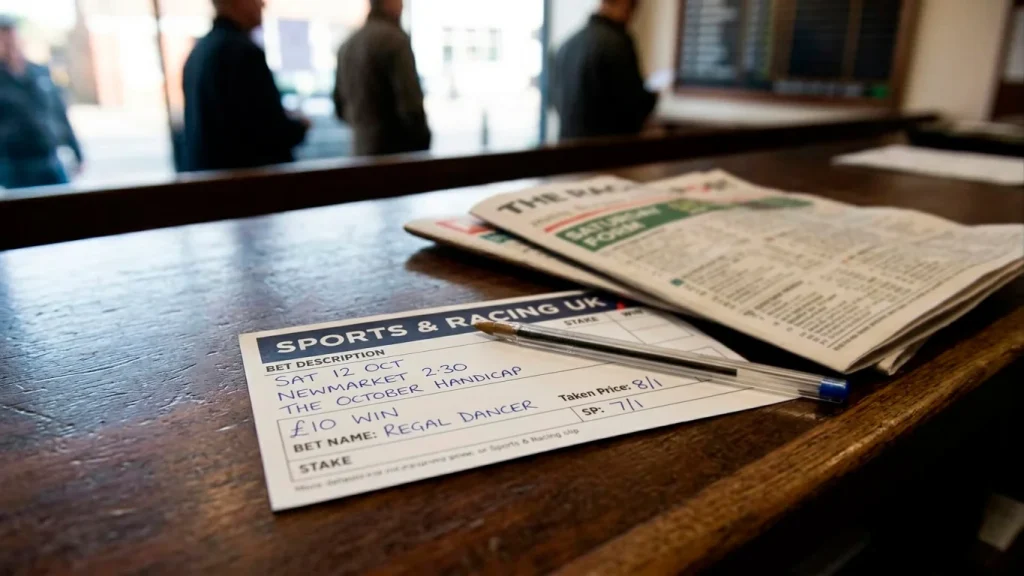
Best Odds Guaranteed Promotions: SP vs Early Pricing Edges
I know a pro who places virtually every win-leg slip he writes through a BOG operator and never SP-only. He has done so for fifteen years. When I asked him to put a number on what BOG has been worth across those years, he shrugged and said “two, two and a half percent on the win side”. That sounds like a footnote. It is not. Two-and-a-half percent on the £766.7 million in UK remote horse racing GGY recorded by the Gambling Commission for April 2024 to March 2025 is the kind of figure that translates, at industry scale, into tens of millions of pounds quietly handed back to punters by operators who promised to pay the bigger of taken price and SP.
BOG is the cleanest and quietest of the major UK punter-side product features. You take a price. The price drifts at the off. You get the bigger of the two. That is the entire deal. The bookmaker pays the difference if SP turns out longer than the price you took; if SP turns out shorter, you keep the price you took. You never lose money for taking a price early — you only gain. The trade-off, as always, is that the price might not have been taken at the moment that maximised it.
What most each-way punters do not understand is which leg of the bet BOG actually applies to. On every major UK operator I have seen the slip language on, BOG applies to the win leg only. The place leg pays the fraction of the price you took, and SP-uplift mechanics do not apply to the place fraction. The win leg can collect a payday boost from BOG; the place leg cannot. That asymmetry is the structural reason BOG and each-way are not as simple as they look.
How BOG works in plain terms
Take a horse at 10/1 in a Saturday handicap on Friday evening. By the time the race goes off on Saturday afternoon, the horse has drifted to an official SP of 14/1. Under BOG, your winning win-leg bet is paid at 14/1 — the bigger of taken (10/1) and SP (14/1). The price you took has been quietly upgraded by the bookmaker. You did not have to do anything. You did not have to ask. The settlement engine just compared the two prices and paid the higher one.
The reverse case is the more common one. You take 10/1 on Friday. The horse shortens to 7/1 SP. Under BOG, your winning win-leg bet is paid at the price you took — 10/1, the bigger of taken (10/1) and SP (7/1). You got the better deal at the time and the operator honours it. BOG does not punish you for taking a price early; it rewards you when the price drifts, and it sits silently when the price shortens.
For the bookmaker, BOG is a marketing cost they have decided to absorb. Operators run BOG to attract early-price money. Without BOG, a rational punter would take SP almost always, waiting for the maximum information. BOG flips the incentive: take a price now, lock it in as your floor, and let the upside come if the horse drifts. The cost is paid out of the operator’s overround, and across thousands of bets per race the maths works for them. But on individual slips, especially in races where late money pushes prices around, BOG delivers measurable cash back to punters who took early prices.
The standard time window matters. UK BOG is typically active from the moment the day-of-race book opens, usually around 8am UK time, through to the off of the race. Ante-post bets are not BOG-eligible. The clock starts when the day-of-race book starts. Slips placed inside that window collect BOG. Slips placed before — ante-post — do not.
BOG on the win leg of an each-way bet
This is the half of an each-way slip where BOG works as advertised. The win leg of an each-way bet is treated, for settlement purposes, identically to a win-only bet on the same horse at the same price. If you took 10/1 each-way and the horse won at SP 14/1, the win leg is paid at 14/1. The £10 win stake returns £10 × 14 = £140 profit plus £10 stake = £150 from the win leg. Without BOG, the same win leg at the taken 10/1 would have returned £110.
The £40 difference is BOG money. It is paid only if (a) the horse wins, (b) SP is longer than the taken price, and (c) the operator’s BOG promise is in force on that race. The third clause is more conditional than punters expect. Many operators exclude BOG on specific events — typically very small fields, races flagged as restricted by the operator’s trader, and some festival races where the operator does not want to write a blank cheque on extra-places-priced horses. Always check the race’s individual BOG status before assuming the promise applies.
The arithmetic of BOG on the win leg compounds with the each-way trade-off in an interesting way. On a long-priced horse you might take at 16/1, BOG protection caps your downside on early-price drift. The horse could drift to 25/1 SP and your win leg still pays 25/1. So early backing of longshots — the kind of bet each-way is built for — gains structurally from BOG. You get the right to bet early without losing the right to whatever drift the market hands you.
The 2025 attendance figures are worth keeping in mind here. Annual attendance at British racecourses topped 5 million for the first time since 2019, reaching 5,031,640 in 2025, up 4.8% on 2024. That on-course presence creates the price-tension that BOG exploits — horses that drift on the morning of a race because money piles onto another runner are the bread and butter of BOG payouts. The more competitive the market on a given race, the more BOG money the win leg of each-way slips collects.
Does BOG apply to the place part?
The short answer: on the vast majority of UK operators, no. The place leg of an each-way bet is paid at the fractional derivation of the taken win price. Most operators’ BOG terms explicitly exclude place legs. So if you took 10/1 and the horse drifted to 14/1 SP and placed without winning, your place leg is paid at one quarter of the taken 10/1 — 2.5/1 — not at one quarter of the 14/1 SP, which would be 3.5/1. The win leg would have collected BOG had the horse won; the place leg does not collect BOG either way.
The arithmetic of this matters more than punters give it credit for. Take a £10 each-way bet on a 10/1 shot in a 16-runner handicap that pays four places at 1/4 the odds. The horse drifts to 14/1 SP and finishes third. With BOG applied: win leg pays nothing because the horse did not win; place leg pays £10 × 2.5 = £25 profit plus £10 stake = £35. Total return £35.
If the place leg had been BOG-eligible, the calculation would have used 14/1 SP × 1/4 = 3.5/1. The place leg would have returned £10 × 3.5 = £35 profit plus £10 stake = £45. The structural absence of BOG from the place leg cost the punter £10 in this example. Multiply that across thousands of each-way slips per Saturday card where BOG would have helped and the gap is meaningful — and it is the operator’s structural advantage in the each-way market.
A handful of operators have, at various points, advertised “BOG on both legs” of an each-way bet as a promotion. These are exceptions, usually time-limited, and the small print is worth reading carefully. The Tattersalls Rule 4 deduction still applies under those promotions, and the interaction between Rule 4 and BOG on both legs gets fiddly. The standard UK position remains: BOG is a win-leg feature, the place leg is paid on the fraction of the taken price, and the each-way punter who values BOG should weight their stake split toward the win leg accordingly.
BOG vs taking a fixed early price
Why take an early price at all, if BOG protects you against drift? Two reasons. The first is that BOG is conditional on the horse winning. The second is that BOG does not give you the right to lock in a long price you do not believe SP will reach.
If you fancy a horse strongly at 16/1 on Friday evening, BOG protects your downside if it drifts to 25/1. But the horse also has to win for BOG to matter. If the horse places without winning, you get the fraction of 16/1 — the taken price — and that is the end of it. SP at 25/1 does not enter the calculation. So an each-way punter taking an early price is, in effect, betting that the horse will finish in the frame at a price the place leg can monetise. The win leg is, in some sense, an option that BOG enhances. The place leg is the floor.
The second reason links back to the 65.6% online share of UK horse racing turnover that the Gambling Commission cited from 2024. Most UK each-way punters are betting through apps and not on course. The price the app shows you on Friday evening is the price the operator is happy to write at scale; the SP is the price the on-course market makes on the day. They are different prices made by different mechanisms. Sometimes the early price is a sharper line than SP will be; sometimes it is softer. BOG smooths out the worst of the difference for win-leg punters who guess wrong on direction. The place leg punter has no such smoothing and has to trust the early price as a standalone judgement.
The trade-off most pros land on: take BOG on the win leg whenever the operator offers it, accept the structural absence of BOG from the place leg, and weight each-way slips toward races where the price you took has a genuine chance of holding up or drifting at SP. The combination of BOG and ante-post each-way is the cleanest version of this trade, because ante-post NRNB protects the stake and BOG protects the win-leg upside the moment ante-post converts to day-of-race.
Does BOG apply to the place leg or only the win leg?
On almost every UK operator, BOG applies to the win leg only. The place leg is paid at the fractional derivation of the price you took, regardless of the SP.
Why do some UK operators exclude BOG on festival each-way bets?
Operators sometimes exclude BOG on specific festival races to cap their exposure to large drifts on heavily-bet runners. The exclusion is published in the operator"s promotional terms and should be checked before each major meeting.
Is BOG always better than taking the early price?
BOG protects you against drift on a winning win leg, but does not change the value of the early price itself. If you believe the early price will hold or shorten, BOG is essentially free protection. If you believe SP will be the sharpest line, taking SP avoids early-price commitment.
Articles
Prepared by the Racing Place Betting editorial staff.
