
UKGC Licence Rules: Settlement Assurances and Consumer Protections
 Available in US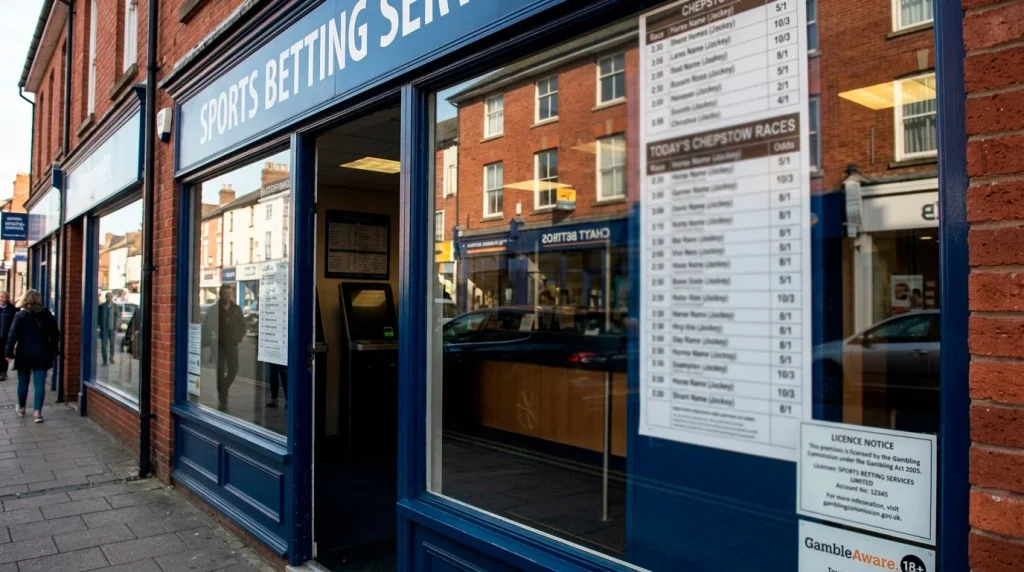
I sat in on a complaints meeting at a UK-licensed bookmaker last year while researching a piece on operator dispute handling. The case was a wrongly settled each-way slip on a Royal Ascot handicap — a horse that had been wrongly classified as fourth when it was actually a dead-heat for third, and the customer had been short-paid by roughly forty pounds. The operator’s complaints team walked through their internal process, the customer’s submission was accepted, the slip was resettled, and the customer was paid in full within five working days. That whole sequence was possible because of a single regulatory instrument: the UK Gambling Commission’s operating licence. The Gambling Commission’s own framing of its regulatory approach has been pointed at times — “we note a BHA employee has offered their personal view” — but the licence framework itself does specific, concrete things for the each-way bettor that are worth understanding in detail.
I want to walk through what the licence actually requires, what consumer protections it builds in, where its limits sit, and how a punter can verify an operator’s licensed status before placing a slip. The Horserace Betting Levy of £108.9 million in 2024-25 flowed exclusively from UK-licensed operators. The £194.7 million in 2025 prize money came primarily from that Levy plus owner contributions. The whole regulated economy of UK racing depends on the licence framework being meaningful — and for the each-way bettor on the spending side of that economy, the licence is the single instrument that provides recourse when something goes wrong.
The Licence Conditions That Actually Matter
I had to explain to a friend once that the UKGC licence is not a single document but a set of conditions — the Licence Conditions and Codes of Practice — that apply to every licensed operator and that govern almost every aspect of how the customer relationship works. The headline conditions are what matter for an each-way bettor.
The first is the requirement to handle customer funds in a defined way. Operators are categorised based on how their customer funds are protected: from “no protection” up to “high protection” depending on whether deposits are ring-fenced, segregated in trust accounts, or otherwise insulated from the operator’s general balance sheet. The category each operator falls into must be disclosed to the customer at account opening. In the event an operator becomes insolvent, the protection category determines how easily customers can recover their balances.
The second is the complaints and dispute resolution requirement. Licensed operators must operate a structured internal complaints process and must offer access to an approved alternative dispute resolution provider if the internal process does not resolve the issue. The approved ADR providers — including IBAS, eCogra and others — provide independent rulings that are binding on the operator. The customer’s right to escalate to ADR is built into the licence itself; an unlicensed operator has no such structure.
The third is the anti-money-laundering compliance framework. Licensed operators are required to monitor customer activity for unusual patterns and may request documentation as part of those obligations. This is the regulatory origin of much of the affordability-check friction the previous article explored. From the customer’s perspective the documentation requests can feel intrusive — but they are the visible end of a compliance framework that also restricts the operator’s ability to handle customer funds carelessly or to interact with the proceeds of crime.
The fourth is the contribution to the Horserace Betting Levy. UK-licensed operators pay the Levy on their UK racing turnover, and that Levy funds prize money, regulatory infrastructure, and welfare programmes. Around £66.9 million of the 2024 Levy went to prize money grants, £19.4 million to regulation, and £7.9 million to welfare and training. An unlicensed operator pays none of this.
Dispute Resolution Routes — What Happens When a Slip Goes Wrong
The complaints meeting I sat in on was not unusual. UK-licensed operators handle thousands of disputed slips a year, the great majority resolved through internal processes within a few working days. The structure is consistent across operators: the customer raises the complaint through the operator’s published complaints channel; the operator investigates, typically within eight weeks; the customer either accepts the resolution or escalates to the approved ADR provider; the ADR provider issues a binding ruling.
For an each-way bettor, the most common dispute types fall into a few clear categories. Place-terms disputes — usually about whether a horse qualified for a place in a field that fell below or rose above a place-terms threshold due to non-runners. Dead-heat settlement disputes — usually about how the place stake was divided across horses that finished a paid position equal. BOG application disputes — usually about whether a back-priced horse was eligible for BOG concession at the off price. Extra-places promotion disputes — usually about whether a specific race qualified for an active promotion.
The licensed operator’s complaints framework handles all of these. The ADR providers’ published rulings build up a body of precedent that operators reference internally when settling new disputes. The unlicensed operator’s customer has no analogue. A wrongly settled slip at an unlicensed operator is, in effect, a gift to the operator — there is no realistic recovery mechanism. The 65-66 per cent of UK bettors who told YouGov pollsters they would refuse financial documentation requests are, in the population of those who migrate to unlicensed alternatives, accepting this risk implicitly.
Levy and Integrity Funding
The £108.9 million Levy for 2024-25 represents the single largest commercial flow from regulated betting into the racing industry. The breakdown of 2024 grants is worth knowing: £66.9 million to prize money, £19.4 million to regulation (which includes integrity functions like raceday officials and post-race testing), and £7.9 million to welfare and training. The £103 million budgeted for 2025-26 reflects a slight projected drop, consistent with the broader turnover decline.
The Levy’s design ties the regulated betting sector to the racing economy in a way that has no analogue elsewhere in UK gambling. A flutter on the Premier League contributes nothing to football clubs. A spin on an online slot contributes nothing to the game studios. A bet on UK racing contributes, via the Levy, to the production of the next season’s races. The 4.2 per cent decline in turnover through Q3 2025 against 2024, and the 12.8 per cent decline against 2023, represent direct compression of this economic engine.
The £4.1 billion annual contribution of UK racing to the economy, supporting 85,000 jobs, sits downstream of this Levy structure. The 20,000-plus employed across the 59 racecourses, 500-plus training yards, and 660 breeders all depend on the Levy producing meaningful prize money and operational support. The £274 million economic impact of the Cheltenham Festival on Gloucestershire, the £60.2 million impact of the Grand National on Liverpool, the £63.2 million Derby contribution to Epsom — these regional economic anchors are funded substantially through licensed-operator Levy contributions.
Verifying an Operator’s Licensed Status
The UKGC maintains a public register of licensed operators that is searchable in real time. Every licensed operator has a licence number, a list of permitted activities under the licence, and a status indicator showing whether the licence is current, lapsed, suspended, or revoked. The register is the authoritative reference point and should be the first stop for any customer evaluating an unfamiliar operator.
The signs that an operator may not be licensed are usually visible without needing to check the register. UK-licensed operators carry the Gambling Commission’s logo and licence number on their website footer. They publish their funds-protection category at account opening. They offer published links to the approved ADR providers. They restrict access from jurisdictions outside their licensed scope. An operator that does not display these elements, or that claims a licence from a jurisdiction outside the major regulatory frameworks (UKGC, Malta Gaming Authority, Gibraltar Regulatory Authority), is one that warrants scrutiny.
The deeper context of how the Levy interacts with each-way bettors specifically — including the question of whether individual customers pay the Levy or whether it is operator-funded — is explored in the detailed breakdown at the Horserace Betting Levy and the each-way bettor. The structural relationship between licence, Levy, and consumer protection is tighter than most punters realise.
The Licence as a Backstop, Not a Guarantee
I want to be honest about what the licence does and does not do, because it is easy to oversell the consumer-protection picture. A UKGC licence does not guarantee that an operator’s prices will be the best available. It does not guarantee that promotional offers will always be honoured exactly as advertised — though it does require operators to make their terms transparent and to honour them as written. It does not protect against general business risk or against operator decisions to restrict winning customer accounts. The recent industry pattern of restricting profitable customers is consistent with licence terms, even when it feels unfair to the affected customers.
What the licence does is provide a structured framework of consumer-protection minima below which a UK-facing operator cannot legally drop. Customer funds protection, complaints handling, ADR access, AML compliance, Levy contribution — these are the floor. Above that floor, operators compete on price, promotion, service and experience. Below that floor sit the unlicensed alternatives that the BGC has tracked rising 500 per cent in three years. The each-way bettor who stays inside the floor pays a small price in friction and gains a real backstop when something goes wrong. The each-way bettor who steps outside the floor accepts that the slip is, in a meaningful sense, only as good as the operator’s word.
Does a UKGC licence guarantee I"ll get paid if my horse wins?
The licence does not directly guarantee payment, but it guarantees a structured framework within which non-payment can be challenged. A licensed operator that refuses to pay a winning bet faces complaints escalation, ADR review, and potential regulatory consequences. The combination of those mechanisms produces a strong practical guarantee of payment for legitimate winning slips.
Which UK each-way disputes go to ADR?
Any dispute that the operator"s internal complaints process fails to resolve within the licence-mandated timeframe — typically eight weeks — can be escalated to the approved ADR provider for that operator. Common each-way disputes that reach ADR include place-terms calculations after non-runner adjustments, dead-heat settlement, and promotional-terms application.
Can I check my operator"s licence number publicly?
Yes. The UK Gambling Commission"s public register is searchable and lists every licensed operator with their licence number, permitted activities, and current status. The licence number should also be displayed on the operator"s website footer alongside the Gambling Commission"s logo.
Articles
Created by the "Racing Place Betting" editorial team.
