
Royal Ascot Each-Way Betting: Race-by-Race Market Analytics
 Available in US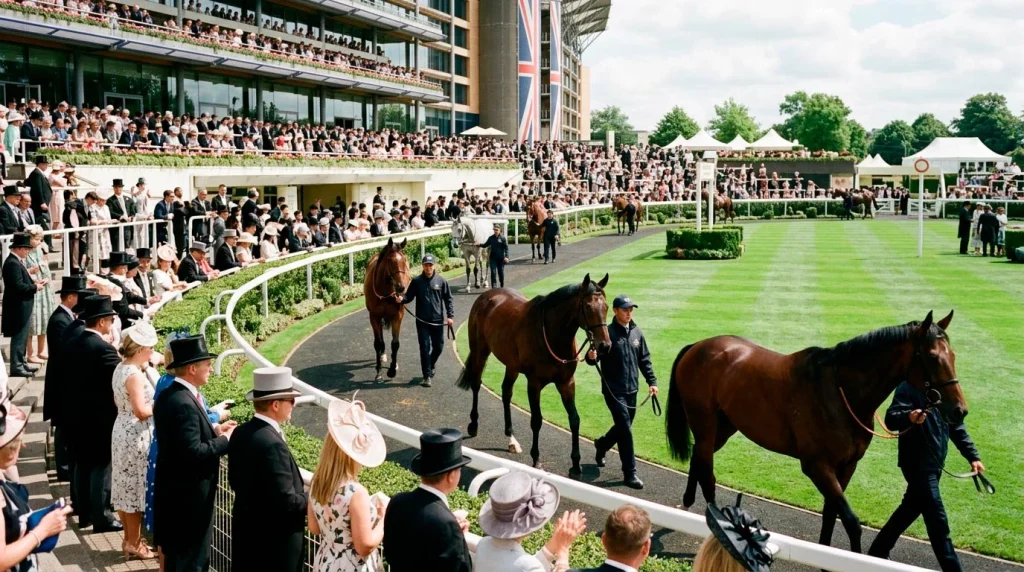
Royal Ascot Each-Way Betting: Group and Handicap Place Terms
Royal Ascot 2025 drew 5 million TV viewers across the five days, with Royal Ascot the largest televised non-football sporting event of the year. The Racecourse Association’s racing director Kevin Walsh, in his January 2026 review of the 2025 attendance figures, said “I’m pleased to see the 2025 annual attendance figures confirm what anecdotal and visual evidence suggested across the year; racecourse attendance has been growing. Racecourses deserve a lot of credit for understanding consumer drivers and implementing attractive, effective marketing campaigns to communicate the excellent value on offer for a day at the races.” Royal Ascot’s role in that resurgence is hard to overstate.
For the each-way bettor, the meeting is structurally trickier than Cheltenham. Cheltenham is mostly Jumps handicaps with a handful of Grade 1 races sprinkled in. Royal Ascot is a Flat meeting where Group 1, Group 2, Group 3, Listed and competitive handicaps sit on the same card every day. Five different race-type categories produce five different each-way menus inside a single afternoon. The Royal Hunt Cup pays seven places on most operator promotions; the Prince of Wales’s Stakes pays three. Both run on Wednesday. The each-way punter who treats Royal Ascot the way they treat Cheltenham will misread half the menu.
The wider context matters too. The 2025 Flat calendar saw an average field size of 8.90 runners across Britain, which is structurally below the threshold where most non-handicap races pay four places. Royal Ascot’s handicaps, by contrast, regularly draw 25-30 runners. The same meeting hosts two opposite ends of the field-size spectrum, and the each-way menu mirrors that asymmetry.
Group 1, 2 and 3: how non-handicap terms tighten the place line
Group races at Royal Ascot — the Queen Anne, the King Charles III Stakes, the Prince of Wales’s Stakes, the Coronation, the Gold Cup, the Diamond Jubilee, the Coronation Cup — are non-handicap races that produce tight, competitive fields of 8-14 runners. Under the standard UK rulebook, a non-handicap of eight or more runners pays three places at one fifth the odds. That is the floor. Operators rarely move above it for Group races at Royal Ascot.
The reason is structural. A Group 1 field has a tight price distribution. The favourite is often 6/4 to 3/1; the second favourite is 4/1 to 6/1; the rest of the field strings out to 16/1 or 20/1. The bookmaker’s overround on the place market is concentrated at the short end, where paying an extra place would cost real money. The marketing competition that drives extra-places promotions on handicaps does not exist on Group races at the same intensity because the casual punter base is smaller relative to the experienced base on Group 1 markets.
What this means for the each-way punter is that Group races at Royal Ascot are typically the least friendly each-way bets of the meeting. A 7/1 each-way bet on a Group 1 with three places at 1/5 pays £14 on a £10 place stake — a place return of 1.4/1, which is the minimum return for any UK each-way bet that gets paid out. The win leg of an each-way slip on a 7/1 horse is where the value lives; the place leg is structurally tight. For the maths underneath why handicaps and non-handicaps diverge so sharply in place-term generosity, the handicap vs non-handicap place terms breakdown walks through it.
The cleanest principle for Royal Ascot Group races: bet them win-only if you have a strong opinion, or use the exchange place market if you specifically want place exposure. The fixed-odds each-way slip is rarely the optimal vehicle on a tight Group field.
Royal Ascot handicaps: where extra places typically appear
The Royal Hunt Cup, the Wokingham, the Britannia, the Royal Hunt Cup, the King Edward VII, the Buckingham Palace, the Copper Horse — Royal Ascot’s handicaps are where the each-way menu opens up. These races routinely declare with 25-30 runners, sometimes more. The Wokingham in particular, a six-furlong sprint handicap on Saturday, regularly fills its safety field of 28 runners and produces deep place markets.
Place terms on Royal Ascot handicaps reliably stretch beyond the standard four places at one quarter. The standard rulebook for handicaps of sixteen or more runners is four places at one quarter the odds. For a 28-runner Wokingham, operators routinely offer five, six or seven paid places — sometimes at one quarter, sometimes at one fifth. The 2025 Wokingham, on Saturday of Royal Ascot week, was offered at seven places at one fifth by two major operators and at six places at one quarter by three others. The 2025 average Flat field size for Britain was 8.90 runners, which makes Royal Ascot’s handicap-field depths roughly three times the national average — and the each-way pricing reflects that depth.
The Royal Hunt Cup, on Wednesday, is the meeting’s other classical extra-places magnet. A mile handicap on the straight track, it draws full fields year after year. Operator promotions on the Hunt Cup have ranged from five places at one quarter to seven places at one fifth across recent years. The 2026 meeting saw six places at one quarter and seven places at one fifth offered across major firms; on a 14/1 each-way slip the six-place 1/4 paid more in cash terms than the seven-place 1/5 unless the horse finished specifically seventh, which is the same arithmetic that governs the Grand National’s extra-places menu.
Listed and Cup races: the awkward middle ground
Listed races and Cup races at Royal Ascot are the awkward middle ground between Group competitiveness and handicap depth. The Hampton Court Stakes, the Sandringham Stakes, the Buckingham Palace Stakes, the Norfolk Stakes, the Albany Stakes — Listed and Group 2 races for two- and three-year-olds — typically draw 8-15 runners with mixed price distributions.
The place-terms menu on these races sits between the Group and handicap extremes. Three places at one fifth is the standard rulebook position. Operators sometimes push to four places at one fifth as a Royal Ascot flourish, particularly on the bigger Listed handicaps and the early-week novice events. They rarely match the six-place generosity offered on the meeting’s pure handicaps. The reason is the same field-shape argument: a Listed race with 12 runners and a 5/2 favourite has a tighter place market than a 28-runner Wokingham with a 9/1 favourite. The marginal cost of adding a paid place is higher.
The trickier category is the meeting’s Group 2 and Group 3 races with bigger fields — the Norfolk Stakes, for instance, can fill to 16-18 runners, which is unusual for a Group 2. When these races land with deeper fields than the operator’s pricing assumed, place terms can move to four places at one quarter as a late upgrade. Slips placed before the upgrade typically inherit the new terms; the operator’s marketing terms specify this in most cases. Always check the slip’s small print, particularly on the Royal Ascot Listed and Group 2 cards where field sizes can be unpredictable until late declarations.
Viewing figures and betting volume
The 5 million TV viewers across Royal Ascot 2025’s five days is the demand-side reason the meeting commands the operator pricing attention it does. The BHA’s 2025 Racing Report noted that Cheltenham Gold Cup Day peaked at 1.8 million viewers, the highest in four years, and the Derby peaked at 1.3 million viewers, the highest in two years. Royal Ascot dwarfs both. Five days of sustained terrestrial coverage, two free-to-air networks involved, and a typical mid-afternoon peak audience for the Gold Cup or the Diamond Jubilee that often exceeds the Derby’s peak by a meaningful margin.
That viewing volume translates directly into casual betting volume. Operator behaviour during Royal Ascot week mirrors Cheltenham’s pattern, though slightly less concentrated. First-time deposits surge across the five days; daily active player counts climb above baseline; average stake per punter rises particularly on Gold Cup day. The pattern is mature: operators expect it, plan their promotional menus accordingly, and time their headline extra-places offers to match the casual surge.
What is harder to read from the public data is the split between casual and experienced volume. Casual punters concentrate on the headline races — the Gold Cup, the Diamond Jubilee Stakes, the Royal Hunt Cup, the Wokingham. Experienced punters spread their volume across the meeting, often weighting toward the Listed and Group 2 races where market mispricing is more common. The each-way menu reflects this split: extra-places promotions are heaviest on the races casuals bet on, and lightest on the races where the experienced base concentrates. The structural asymmetry, again, reflects the operators’ commercial logic rather than the racing’s relative quality.
Why does a 30-runner Wokingham Handicap pay so many places?
The depth of the field allows operators to spread the overround across a wider market. A 30-runner field with deep price distribution makes paying five, six or seven places economically viable for the bookmaker, and the marketing competition for casual money during Royal Ascot week drives operators to match each other"s headline place-terms offers.
Do extra places apply at Royal Ascot beyond the Royal Hunt Cup?
Yes, on most major handicaps across the five days. The Wokingham, Britannia, Buckingham Palace, King George V and Copper Horse handicaps routinely attract five to seven paid places at major operators. Group races and most Listed races do not.
How do Group race fields change each-way value at Ascot?
Group race fields are typically 8 to 14 runners with a tight price distribution. Place terms stay at three places at one fifth in most cases, which makes the place leg of an each-way slip on a Group 1 favourite a poor-value commitment. Win-only or exchange place markets are usually better expressions of a Group race opinion.
Articles
Prepared by the Racing Place Betting editorial staff.
