
Field Size and Place Value: Overcoming the 8.9-Runner Anomaly
 Available in US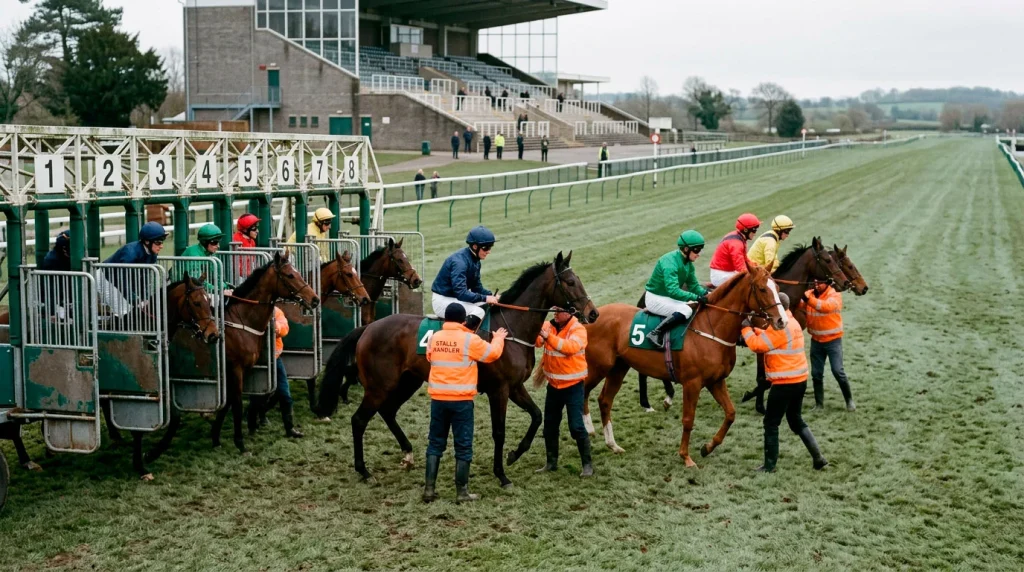
A racing journalist I used to drink with at a Tuesday Wolverhampton card had a theory he repeated until I started believing it. “The slip you write,” he said, “is only half the bet. The other half is the size of the field by the time the gates open.” He meant it loosely at the time. He turned out to be more right than he intended. The 2025 UK racing season produced one of the most awkward field-size profiles in recent memory: Flat racing averaged 8.90 runners per race across the calendar, with National Hunt averaging 7.84. Premier Fixtures pulled those numbers up — to 11.02 on the Flat and 9.41 over jumps — while Core Fixtures dragged them down, with Flat Cores averaging 8.54 (from 8.78 the previous year) and Core Jumps falling to 7.63 (from 8.52). And the most consequential single number for an each-way punter is that twenty-six per cent of 2025 UK races had only five to seven runners in handicaps or six to seven in non-handicaps.
That clustering around eight to nine runners is what I have been calling the 8.9-runner problem ever since. It is the field size that just qualifies for three-places-paid place terms, sits right at the cliff edge of dropping to two places if a non-runner falls out, and produces some of the least generous each-way structures on any racecard. Reading field size has become a more important skill than reading form.
What the 2025 Data Actually Shows
I spent the early winter of 2025 building a spreadsheet of every UK race for the season and grouping the place terms by field size, and the picture that emerged was bleaker than I expected. The headline 8.90 Flat average and 7.84 jumps average compresses the place-terms picture badly. Fields of exactly five to seven runners — twenty-six per cent of the calendar — pay only two places at one-quarter. Fields of eight runners — which the average is right next to — pay three places at one-fifth for non-handicaps and three places at one-fifth for handicaps in the eight-to-eleven bracket. Fields of twelve to fifteen runners, properly competitive handicaps, pay three places at one-quarter. Sixteen-plus handicaps pay four places at one-quarter.
The cliff edges matter more than the gradients. Moving from a seven-runner non-handicap to an eight-runner non-handicap shifts the slip from two places to three places. Moving from an eight-runner handicap to a twelve-runner handicap shifts the fraction from one-fifth to one-quarter. Moving from a fifteen-runner handicap to a sixteen-runner handicap adds a fourth paid place. Each cliff edge can swing the effective return on a placed bet by twenty or thirty per cent of stake.
The Premier Fixture data sharpens this. With Premier Flat averaging 11.02 runners and Premier Jumps averaging 9.41, the typical Premier race sits comfortably in the three-places-paid territory and frequently crosses into four-places-paid for headline handicaps. Premier Fixture turnover was up 2.7 per cent per race in 2025. Core Fixture turnover fell 8.6 per cent per race. Money is following field size, and field size is following the Premier Fixture programme.
Why Eight-Runner Fields Hurt the Each-Way Punter
I had to explain this to a friend who could not see why his Saturday returns had got worse over a couple of seasons even though his win-percentage was steady. The answer was that he had been betting more and more eight-and-nine-runner races, where the place fraction is one-fifth rather than one-quarter, and where the third paid place is the difference between his slip returning and his slip losing.
The one-fifth fraction is structurally punishing on every short and mid-range price. A 6/1 horse on a one-fifth race returns the place portion at 6/5 — just over the stake. A 10/1 returns 2/1 on the place portion. The same horse on a one-quarter race would return 1.5/1 and 2.5/1 respectively. Compounded across a season of fifty placed bets, the gap between one-fifth and one-quarter is hundreds of pounds for a moderate-stake punter.
The third-place issue compounds it. On an eight-runner field paying three places, the third place is the marginal payout — and an eight-runner field is the smallest field that pays three places at all. Drop to seven runners and the slip falls to two places at one-quarter. Drop to four runners and the slip becomes win-only. The clustering of UK fields around the seven-to-nine-runner range means a significant percentage of each-way slips sit on the edge of these cliff edges, and the non-runner risk — a horse withdrawing before the off and dropping the field below a place-terms threshold — is real and frequent.
Where Fields Still Pay Properly
Not every UK race has been hit by the contraction, and the bright spots are concentrated in specific places. The Grand National at Aintree continues to run forty-runner fields with seven places at one-fifth on standard book terms — Sky Bet’s 2026 announcement of seven places at one-fifth and Betfred’s earlier 2025 offer of the same set the benchmark. The Cheltenham Festival sustains deep fields across its four days, with all twenty-eight 2025 festival races sitting in the UK’s top thirty-one most-bet races of the season. The Wokingham, the Cesarewitch, the Cambridgeshire, the Lincoln — the headline Saturday handicaps — routinely run twenty-plus runners and qualify for four-places-paid terms with extra-places promotions stacked on top.
The Premier Fixture programme is the structural reason for these bright spots. The 2025 Flat data showed Premier Flat fixtures averaging 11.02 runners against an overall Flat average of 8.90, which is not a small gap. The fixtures themselves attract bigger fields because they pay better prize money — £194.7 million across the 2025 season, up 3.5 per cent — and bigger fields produce better each-way terms. The relationship is self-reinforcing. For the deeper analysis of how the Premier-vs-Core fixture split has shaped this two-speed market, the detailed walkthrough at Premier vs Core fixtures and each-way value sets out the turnover gap and the fixture-level data race by race.
The smaller racecourses and the midweek programme tell a different story. The 2025 Core Fixture data showed Flat Core averaging 8.54 runners and Jumps Core averaging 7.63 — both below the season averages and both sitting in the three-paid-places-at-one-fifth band. A casual punter who bets a Saturday morning slip across whatever races appear on the day, without filtering for Premier or Core, is structurally biasing themselves toward the worse end of the place-terms spectrum without realising it.
Implications for the Each-Way Bettor
The single behaviour change that moves a casual each-way punter’s expected return more than any other is filtering races by field size before bet selection. I now never click into a race until I know how many runners are confirmed and what place terms apply at that field size. A 10/1 horse in a fifteen-runner handicap is a different bet from a 10/1 horse in a nine-runner non-handicap on the same card. The horse may be the same. The bet — what the slip actually pays — is fundamentally different.
The practical workflow I run is to check the day’s runners-and-riders against the place terms table first, identify the races that fall into the four-places-paid bracket or the three-places-at-one-quarter bracket, and concentrate the each-way action on those races. Smaller fields with one-fifth fractions get one of two treatments: either a straight win bet (which removes the dragging place portion) or, if the horse is genuinely long-priced, an each-way slip with eyes open about the marginal place economics.
The extra-places promotions extend the bright-spot list during festival weeks. Sky Bet’s 2026 Grand National terms of seven places at one-fifth, the Cheltenham Festival’s routine extra-places offers, and the Royal Ascot promotional concessions all push specific races into temporarily improved each-way territory. Those weeks reward attentive punters who track the offers and concentrate stakes on the qualifying races. The rest of the calendar rewards punters who filter their action by field size and accept that not every race justifies an each-way slip.
The Slip You Should Not Write
I keep a mental note now: any race where I would consider an each-way bet has to clear two field-size hurdles before I write the slip. It has to have at least twelve runners by the off if it is a handicap, and it has to have at least eight runners by the off if it is a non-handicap. Below those thresholds I either go win-only or stand the race down entirely. The 8.9-runner problem is a structural feature of the modern UK calendar, not a temporary glitch — Core Fixture field sizes have fallen for three consecutive seasons, and Premier Fixtures continue to widen the gap. The each-way punter who learns to read field size before form is already ahead of the punter who reads form and ignores field size. Everything else is detail. The field size is the architecture.
Has the average UK field really been shrinking?
Yes, with the contraction concentrated in Core Fixtures. The 2025 data showed Flat Core averaging 8.54 runners (down from 8.78) and Jumps Core averaging 7.63 (down from 8.52). Premier Fixtures held up better, with Premier Flat averaging 11.02 and Premier Jumps 9.41 — meaning the season-average figures hide a meaningful split between fixture types.
Are Premier Fixtures consistently better for each-way value?
On the average, yes. Premier Fixtures run bigger fields, more place positions per race, and more extra-places promotions during the headline weeks. The gap between Premier and Core has widened in 2025 — Premier turnover per race rose 2.7 per cent while Core fell 8.6 per cent — and that gap is reflected in field sizes and place terms.
Does field size matter more than odds in each-way decisions?
In most cases it matters at least as much. A 10/1 horse in a sixteen-runner handicap paying four places at one-quarter is a fundamentally different bet from a 10/1 horse in a seven-runner non-handicap paying two places at one-quarter. The horse is the same; the place architecture around it makes the slip pay very differently.
Articles
Created by the "Racing Place Betting" editorial team.
